Mix the warm milk with the yeast and a teaspoon of sugar.
Let stand for 10 minutes.
In a large bowl combine:
Flour
Butter
Sugar
Salt
Egg yolks
Lemon zest
Vanilla
Add the yeast mixture.
Knead until smooth and elastic.
Cover and let rest for about 1 hour.
Step 2: Prepare the Filling
Heat the milk until warm.
Stir in the sugar.
Add either:
Ground walnuts
or
Ground poppy seeds
Mix in vanilla, lemon zest, cinnamon (for walnut filling), and raisins if using.
Allow the filling to cool completely.
Step 3: Assemble the Rolls
Divide the dough into two equal portions.
Roll each into a rectangle about 12 × 14 inches (30 × 35 cm).
Spread the filling evenly, leaving a small border around the edges.
Roll tightly into a log.
Seal the ends carefully.
Place seam-side down on a parchment-lined baking tray.
Step 4: Traditional Egg Wash
Brush each roll with egg yolk.
Allow to dry for 20–30 minutes.
Then brush lightly with beaten whole egg.
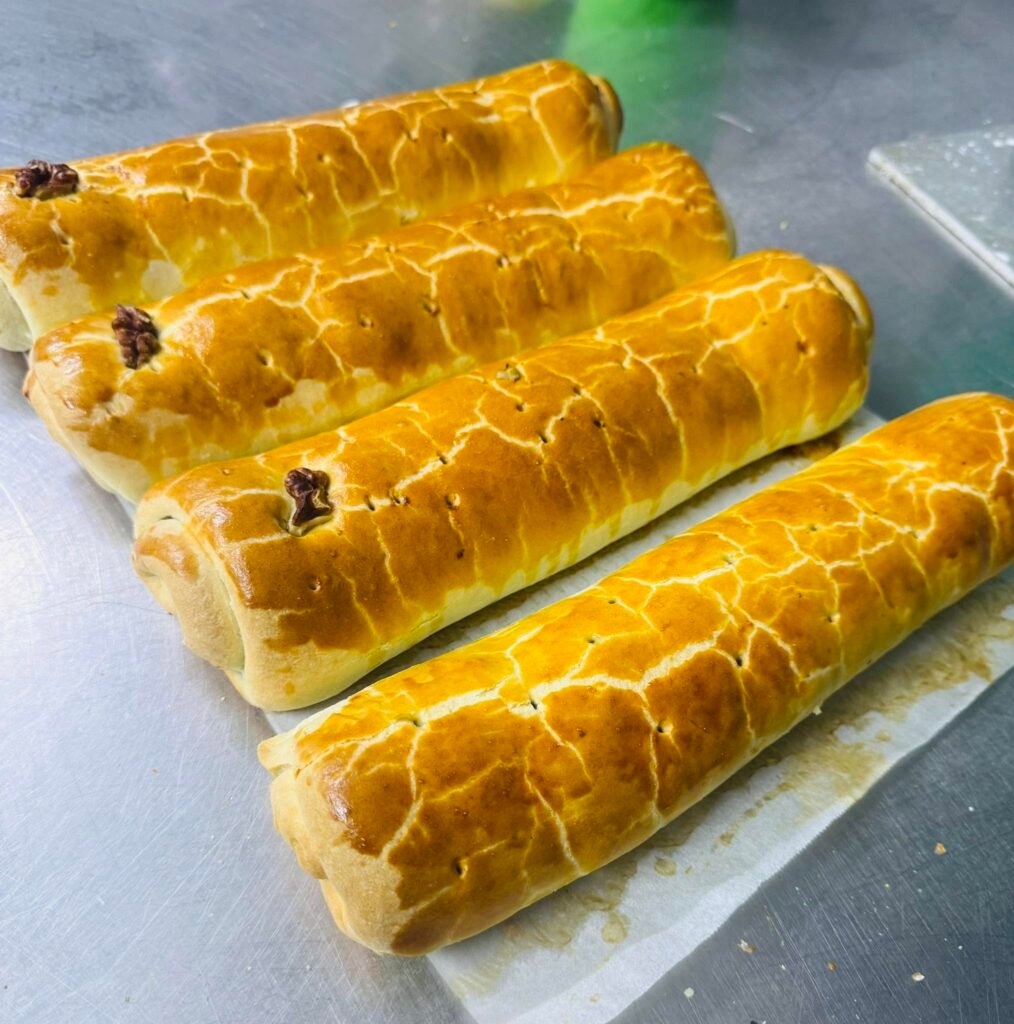
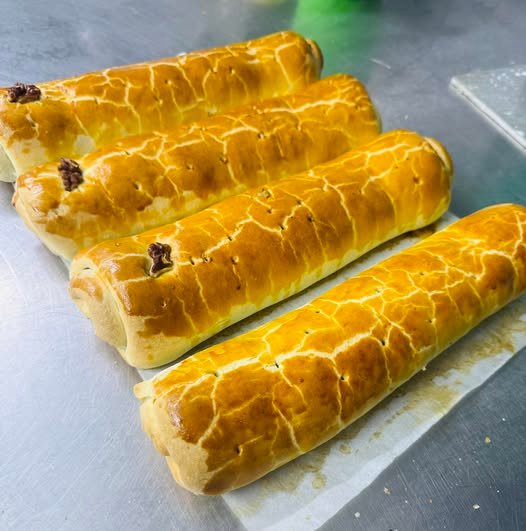
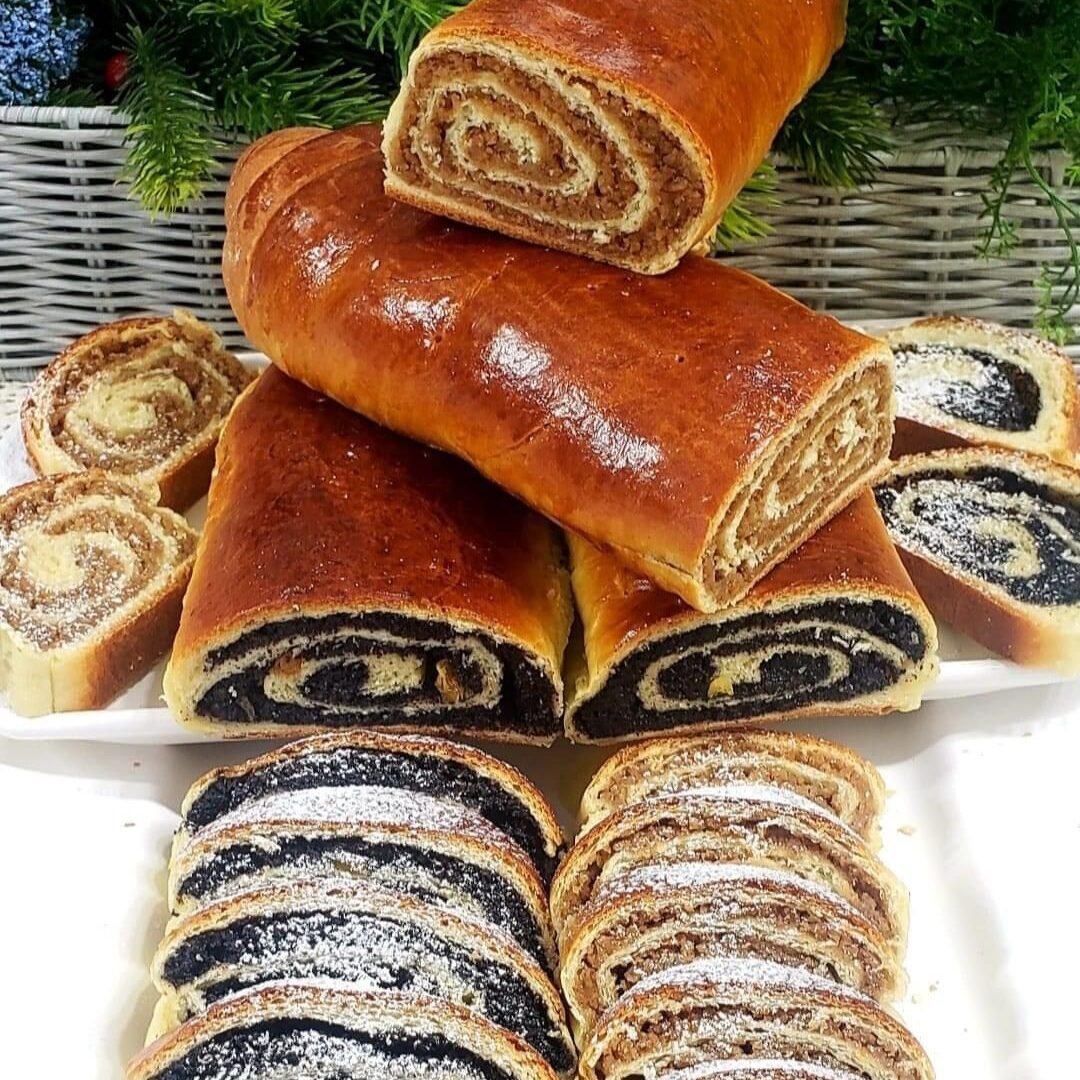
This traditional two-step process creates the famous crackled Bejgli crust.
Prick the rolls several times with a skewer to release steam during baking.
Step 5: Bake
Bake in a preheated oven at 350°F (175°C) for 35–40 minutes, or until deep golden brown.
Allow to cool completely before slicing.
Tips for Perfect Bejgli
The filling should be thick, not runny.
Roll the dough tightly to prevent gaps.
Don’t overfill the pastry.
Always prick the rolls before baking.
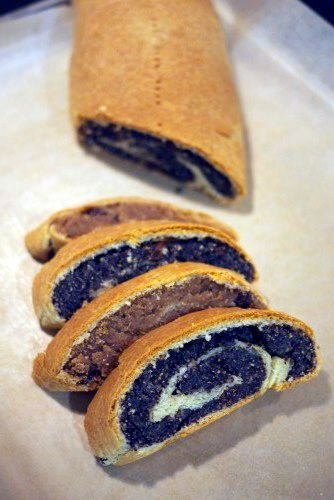
Cool completely before slicing for clean, beautiful swirls.
Serving Suggestions
Hungarian Bejgli is delicious served with:
Coffee
Tea
Hot chocolate
Mulled wine
Vanilla ice cream
Fresh whipped cream
Storage
Room Temperature: Up to 5 days in an airtight container.
Refrigerator: Up to 1 week.
Freezer: Wrap tightly and freeze for 3 months.
Frequently Asked Questions
What is Hungarian Bejgli?
Bejgli is a traditional Hungarian rolled pastry filled with sweet walnut or poppy seed filling, commonly served during Christmas and festive occasions.
Why does Bejgli crack on top?
The characteristic crackled crust comes from brushing the pastry first with egg yolk, allowing it to dry, then brushing with whole egg before baking.
Can I make it ahead?
Yes. Bejgli actually tastes even better after resting for a day, allowing the flavors to develop.
Can I use other fillings?
Absolutely. While walnut and poppy seed are the most traditional, you can also fill Bejgli with chestnut purée, cocoa, or sweet fruit preserves.
Nutrition (Per Slice)
Calories: 320
Protein: 7g
Carbohydrates: 35g
Fat: 18g
Saturated Fat: 8g
Fiber: 3g
Sugar: 15g
Final Thoughts
Traditional Hungarian Bejgli is one of the country’s most iconic holiday pastries, known for its buttery dough, rich walnut or poppy seed filling, and beautifully crackled crust. Whether served during Christmas, Easter, or a family gathering, this timeless dessert brings authentic Hungarian flavors and centuries of baking tradition to your table.