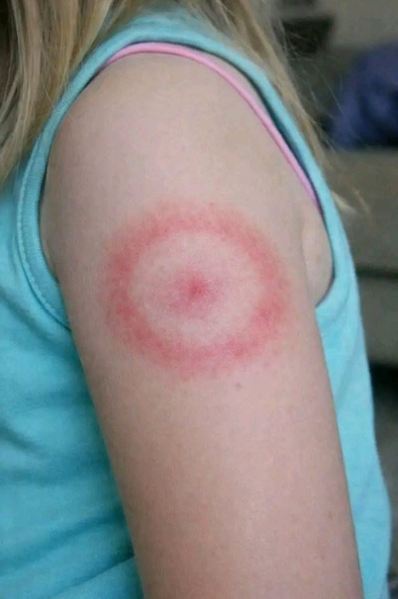
My Daughter Woke Up With a Strange Red Ring on Her Arm: A Parent’s Guide to Ring-Shaped Rashes (And When to Breathe Easy)
Few things can worry a parent more than discovering an unusual rash on their child’s skin. One morning, what looks like a perfectly healthy arm can suddenly have a red ring-shaped mark, leaving you wondering what caused it and whether you should rush to the doctor.
The good news is that not every ring-shaped rash is an emergency. Many have common, treatable causes, while others simply need observation or a routine medical evaluation.
Understanding what you’re seeing can help you respond calmly and appropriately.
What Does a Ring-Shaped Rash Look Like?
A ring-shaped rash is usually:
Circular or oval
Red or pink around the edges
Sometimes lighter in the center
Flat or slightly raised
Itchy in some cases, but not always
The appearance alone doesn’t always reveal the cause, which is why it’s important to consider other symptoms as well.
Common Causes of Ring-Shaped Rashes
Several conditions can create a circular rash.
Some are harmless, while others require medical attention.
Ringworm (Tinea Corporis)
Despite its name, ringworm is not caused by a worm.
It is a common fungal infection that typically causes:
A red circular rash
Raised, scaly edges
Mild itching
Gradual enlargement over time
Ringworm is contagious but usually responds well to antifungal creams prescribed or recommended by a healthcare professional.
Insect Bites
Some insect bites can leave behind a circular area of redness.
This may happen because of:
Mosquitoes
Spiders
Fleas
Ticks
Most bites improve within several days, but certain tick bites deserve closer attention.
Contact Dermatitis
Skin can react after touching something irritating, including:
Plants
Soaps
Lotions
Detergents
Jewelry
These reactions often cause redness, itching, and irritation.
Eczema
Certain forms of eczema can occasionally appear in circular patches.
The skin may become:
Dry
Red
Itchy
Cracked
Moisturizing and appropriate medical treatment often help control symptoms.
Could It Be a Tick Bite?
One condition that often receives attention is the bull’s-eye rash associated with Lyme disease.
This rash may:
Expand gradually
Have a lighter center
Appear several days after a tick bite
Not always itch or hurt
However, not every circular rash is Lyme disease, and not every person with Lyme disease develops the classic bull’s-eye appearance.
If there has been possible tick exposure, it’s important to seek medical advice promptly.
When Should Parents Seek Medical Care?
Contact a healthcare professional if the rash:
Continues to grow
Becomes painful
Produces pus or drainage
Is accompanied by fever
Appears after a known tick bite
Doesn’t improve after several days
Occurs with swelling of the face or difficulty breathing (seek emergency care immediately)
A proper examination is often the best way to determine the exact cause.
Caring for Your Child at Home
While waiting for medical advice, you can:
Keep the area clean and dry.
Discourage scratching.
Avoid applying multiple creams unless recommended by a healthcare professional.
Monitor the rash for changes in size, color, or symptoms.
Take a photo each day to document any changes.
Avoid self-diagnosing based solely on online images, as many skin conditions can look similar.
Preventing Common Skin Rashes
Some simple habits may reduce the risk of certain rashes:
Wash hands regularly.
Avoid sharing towels and clothing.
Wear protective clothing in wooded or grassy areas.
Perform tick checks after outdoor activities.
Use insect repellent when appropriate.
Keep skin clean and moisturized.
These steps can help lower the risk of infections and skin irritation.
Why a Medical Evaluation Matters
Even experienced parents cannot always identify a rash by appearance alone.
Several conditions can produce nearly identical circular marks.
A healthcare professional may consider:
The child’s age
Recent activities
Exposure to insects
Other symptoms
Medical history
This information helps guide the correct diagnosis and treatment.
Final Thoughts
Finding a strange red ring on your child’s arm can certainly be alarming, but in many cases the cause is manageable and treatable. Staying calm, observing the rash carefully, and seeking medical advice when appropriate are the best steps you can take.
Remember that ring-shaped rashes have many possible causes, ranging from simple fungal infections to insect bites and skin irritation. If the rash is spreading, accompanied by fever, follows a possible tick bite, or you’re simply unsure, contacting a healthcare professional is the safest choice.
With prompt attention and the right care, most children recover quickly and return to their normal, active selves.