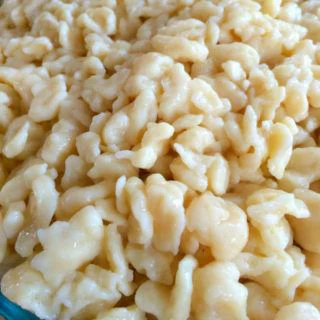
In a large bowl, mix flour and salt. Add eggs and slowly pour in water while mixing.
👉 The dough should be thick, sticky, and elastic — not runny like pancake batter.
2. Rest the dough (optional but recommended)
Let the batter rest for 10–15 minutes. This improves texture.
3. Shape the dumplings
Bring a large pot of salted water to a boil.
There are 3 traditional ways:
Use a galuska grater (traditional tool)
Use a spoon and cut small pieces
Push dough through a colander
Drop small pieces directly into boiling water.
4. Cook
The dumplings are ready when they float to the surface (about 2–4 minutes).
5. Drain and finish
Remove with a slotted spoon and drain well.
Optional finishing:
Toss with butter
Add fried onions
Or mix directly into sauce (most traditional way)
🍲 How Hungarians Serve Galuska
Nokedli is most commonly served with rich sauces and stews such as:
Chicken Paprikash
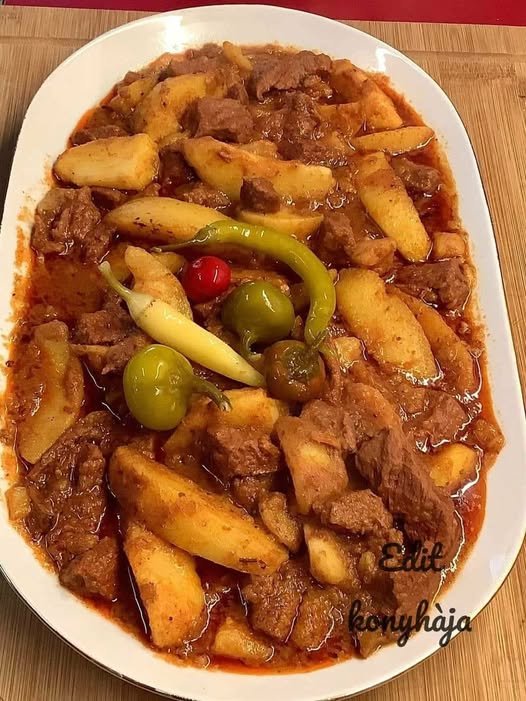
Pork stew (pörkölt)
Beef goulash sauce
Creamy mushroom sauce
It absorbs flavor perfectly, making every bite rich and satisfying.
🔥 Tips for Perfect Galuska
Dough must be sticky — not dry
Do not overcook (they become mushy)
Drop small pieces for even cooking
Rinse lightly only if needed (for serving plain)
Fresh is always best — do not store long
🇭🇺 Cultural Note
Galuska is a cornerstone of Hungarian home cooking. It is quick, inexpensive, and deeply traditional.
Many Hungarian families still prepare it by hand using old kitchen tools, especially during Sunday family meals.
It is similar to:
German Spätzle
Austrian Knöpfle
But the Hungarian version has its own rustic identity.
🧡 Final Thoughts
Hungarian Galuska (Nokedli) is simple but essential. It transforms any stew into a complete comfort meal and represents the heart of Hungarian home cooking.
Soft, warm, and satisfying — it is a dish that connects generations.